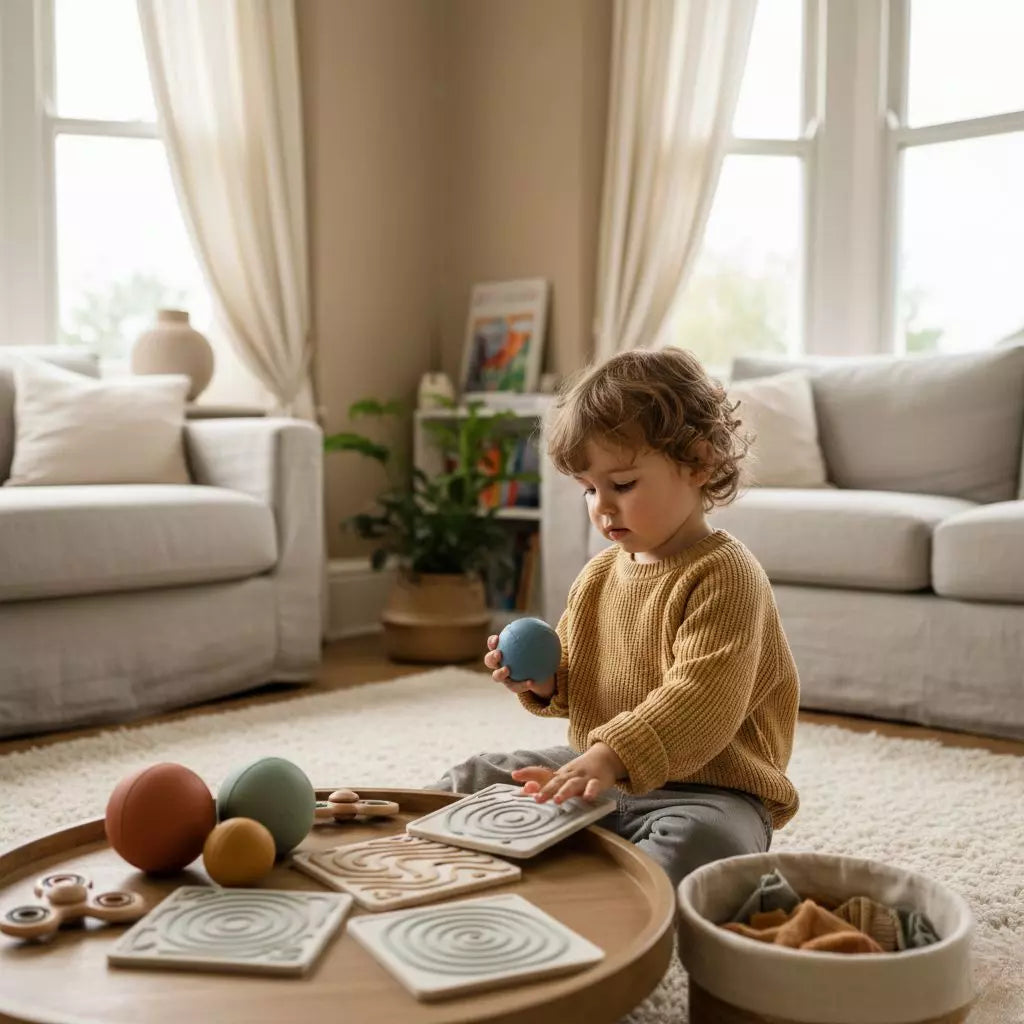
Why Montessori Toys Encourage Independent Learning
Montessori education focuses on helping children learn through real experience, choice and hands-on exploration. In this approach, toys are not just entertainment, they are tools that nurture confidence, independence and natural curiosity. This is where Montessori Toys stand out.
If you have already explored the Educational Toys Guide UK, you will recognise how important meaningful, self-directed play is for development. Montessori-style materials take this principle further by giving children the freedom to repeat, observe and master tasks at their own pace.

The Core Principles Behind Montessori Toys
High-quality Montessori Toys are designed with intention and simplicity. They support the philosophy that children learn best when materials are calm, accessible and connected to real-life skills.
Purposeful, Minimalist Design
Montessori materials avoid bright colours, flashing lights or complicated mechanisms. Instead, they focus on natural textures, soft tones and simple shapes. This calm aesthetic helps children concentrate for longer and engage more deeply with what they are doing.
Hands-On Learning Through Repetition
Montessori toys encourage repetition, a core element of mastery. Whether a child is threading beads, stacking cylinders or sorting shapes, these activities strengthen fine motor skills, hand–eye coordination and early problem-solving.
Real-Life, Practical Skills
Many Montessori Toys are inspired by real tasks: pouring, transferring, matching, cleaning and organising. These experiences help children feel capable and independent, boosting confidence in everyday routines.
Child-Led Exploration
Instead of prescribing one way to play, Montessori materials invite children to experiment and explore. This helps them develop autonomy, decision-making skills and a stronger sense of self.

Educational Benefits of Montessori Toys
Well-chosen Montessori Toys support a wide range of developmental goals, from cognitive skills to emotional growth.
Improving Concentration and Focus
Because Montessori toys are calm and sensory-friendly, they create an environment where children naturally want to focus. This deep, uninterrupted engagement builds longer attention spans over time.
Strengthening Fine Motor Skills
Tracing boards, threading activities, wooden puzzles and other Montessori tools support early handwriting skills, dexterity and hand control.
Building Early Maths and Language Foundations
Montessori learning trays, number rods and sandpaper letters introduce early maths and phonics in a tactile way. Children learn through movement and touch, not memorisation.
Encouraging Emotional Regulation
The slow, rhythmic nature of Montessori activities helps children feel calm and grounded. Quiet repetition reduces overstimulation and supports emotional resilience.
Popular Types of Montessori Toys
Understanding key categories of Montessori Toys helps families choose resources that match their child’s interests and developmental needs.
Montessori Practical Life Materials
Pouring jars, scooping tools, tweezers, bowls and sorting trays teach real-life independence and strengthen fine motor precision.
Montessori Wooden Puzzles
Simple, well-crafted Wooden Puzzle designs encourage problem-solving, logic and careful observation. They build patience and perseverance.
Montessori Sensory Materials
Texture boards, sound cylinders and matching pairs help children refine the senses, a key element of early cognitive development.
Montessori Maths and Language Tools
Number rods, sandpaper letters, counting trays and shape matchers support early numeracy and phonics through hands-on exploration.

How to Use Montessori Toys at Home
You do not need a specialised classroom to enjoy the benefits of Montessori Toys. With a few simple routines, any home can become a calm, child-led learning environment.
Create Accessible Toy Shelves
Place toys at the child’s height in open baskets or trays. This encourages independence and teaches children how to choose and tidy up their own activities.
Offer a Small Selection
Montessori play works best with fewer, well-chosen toys. Rotating materials keeps interest high and prevents sensory overload.
Follow the Child
Observe what your child naturally gravitates towards, puzzles, sorting, construction or sensory tasks, and choose Montessori Toys that support these strengths.
Demonstrate Slowly, Then Step Back
Show how to use the toy once in a calm, slow demonstration. After that, let the child repeat independently at their own pace.
Final Thoughts – Montessori Toys for Meaningful Learning
Montessori Toys help children develop confidence, independence and deep focus through hands-on exploration. They support early skills in calm, structured and child-led ways that stay aligned with real-life learning.
Families looking to introduce Montessori play at home can explore a curated range of Montessori Toys, alongside beautifully crafted Wooden Toys and complementary Educational Toys. And for those wanting a trusted starting point, Foxie Doodles brings together thoughtfully chosen materials that inspire meaningful growth.